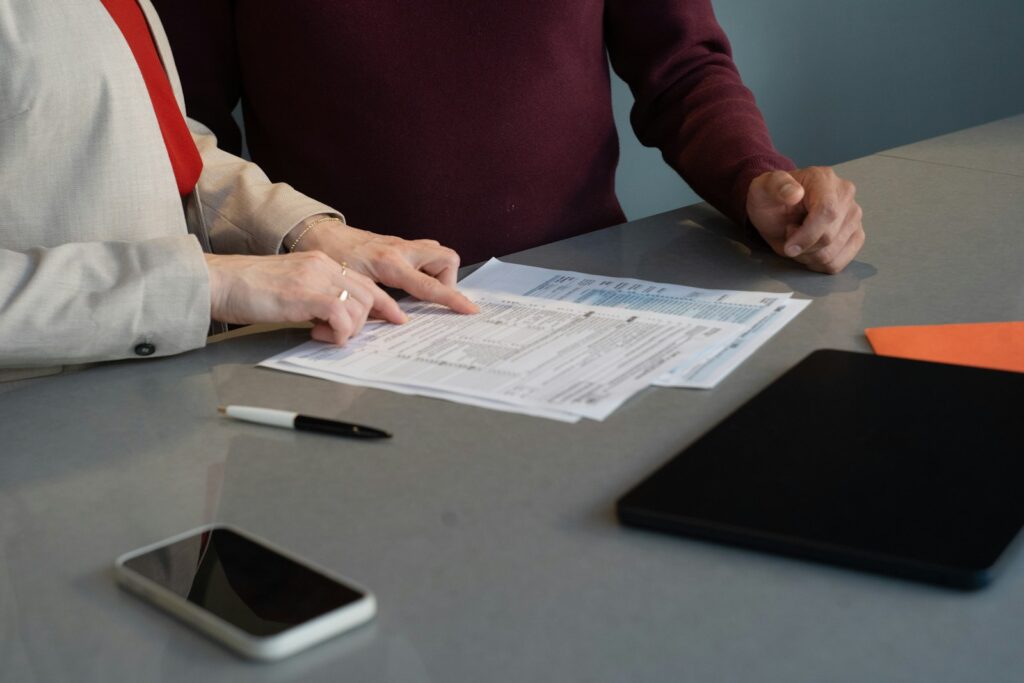
You are at the table for a contract renewal. The buyer is clear: the price has to come down by 15%, or the business goes to another supplier. Your regular contact responds sympathetically: “I really want to keep working with you. If you give me 8% off, I can get procurement on board.”
That sounds like a solution. But is it actually a good offer?
This is a familiar example of good cop, bad cop: a negotiation tactic in which a tough stance and a friendly approach reinforce each other. If you recognise the pattern, you can bring the conversation back to substance and stop relief from deciding the outcome.
In this tactic, two representatives of the same organisation take on different roles.
The bad cop applies pressure. They make high demands, reject proposals or stress the consequences if no agreement is reached. The good cop shows understanding, appears to rein in their colleague and offers a way out. That way out usually comes at the price of a concession from you.
The effect lies in the comparison. After a hard demand, a more moderate proposal quickly feels reasonable. In the example, an 8% discount looks attractive next to the original 15%. Yet that difference says little about whether the discount makes commercial sense.
The tactic also comes in subtler forms. One person can alternate between being friendly and inflexible. Or a helpful contact refers to an absent director who “will never agree to these terms”. Harvard’s Program on Negotiation describes several variations of this pattern.
Good cop, bad cop mainly influences how you judge the proposal, the people and your alternatives.
The friendly negotiator benefits from the contrast with their stern colleague. As a result, you can confuse the reasonableness of the person with the attractiveness of the offer.
Rafaeli and Sutton described this principle of emotional contrast in their 1991 study. Based on qualitative studies of, among others, bill collectors and interrogators, they developed an explanation of how opposing emotional displays can encourage compliance.
The tough negotiator draws attention to potential loss: a departing customer, a missed contract or a damaged relationship. This can lead you to judge your own alternatives less favourably.
In an experimental study from 2000, Brodt and Tuchinsky found that participants were more willing to accept an offer after a bad cop followed by a good cop. The reverse order did not produce the same improvement. The bad cop also lowered expectations of a favourable outcome if the offer was rejected.
When someone says they want to fight for you internally, a sense of connection forms easily. You want to help that person close the deal. The risk is that you give away more than is wise, for example about your minimum price or your room for further discount.
The contact may be sincerely helpful. At the same time, they still represent the interests of the other organisation.
These studies help explain the mechanism. They do not prove that the tactic works in every commercial negotiation. Simulated situations differ from complex business relationships, where trust, reputation and future collaboration also count.
You do not need to prove that the other side is deliberately playing a game. You can limit the pattern’s influence by keeping the conversation businesslike and concrete. The approach below combines insights from the research with general negotiation principles.
Before the meeting, set your target, your walk-away point and your best alternative. That last one is also known as your BATNA: what will you do if no agreement is reached?
Look beyond price. Include the size of the contract, payment terms, delivery risks, available capacity and future commitments.
That way you assess a proposal on its total value. MIT Sloan stresses the importance of alternatives and objective criteria in this preparation.
Not every difference in attitude is a deliberate tactic. Procurement may focus on cost, while an operations manager mainly wants continuity. Those interests can genuinely clash.
So ask for clarity first:
“I’m hearing different requirements. Which conditions are essential, and what overall proposal can you approve?”
This puts their joint position on the table without making the conversation personal.
Precisely when the friendly negotiator offers a way out, a short pause is useful. Look at what has actually changed. Is the price better? Have obligations been dropped? Are risks shared differently?
Then ask yourself this question:
Would I still find this an attractive offer if it had been made directly, in a neutral tone?
Make general statements concrete. With a discount request, you can ask about comparable offers, purchase volumes or changes to the service.
Under time pressure, ask where the deadline comes from and what changes after that date. When someone appeals to a director or committee, ask who decides and which conditions apply for approval.
For example:
“What commitment do you need to approve this, and who can confirm that on your behalf?”
A friendlier conversation is not in itself a reason to improve your terms. If you move, make clear what you expect in return.
“A lower price is open for discussion with a guaranteed annual volume and shorter payment terms.”
You can also negotiate on contract length, delivery scheduling, service levels or risk allocation. Name what you want in return explicitly. Negotiation expert Deepak Malhotra advises making concessions visible and stating clearly what reciprocity you expect. See also why teams concede too quickly and how to prevent it.
Agree internally who leads the conversation, how much room there is and when consultation is needed. Record proposals as one coherent package.
This prevents different people from making separate commitments. It also helps ensure that a price reduction stays linked to the agreed return.
If the conversation keeps alternating between pressure and reassurance, you can calmly raise it:
“The mixed messages make it hard to assess the proposal. Could you make one joint proposal, including the conditions for approval?”
This steers towards a workable negotiation. You can then compare the offer with your predetermined criteria and your realistic alternative.
A good relationship helps you do business. In a negotiation, it remains important to tie that relationship to clear agreements.
Appreciate the efforts of a helpful contact, probe hard demands and take time to assess the full proposal. That way you can keep collaborating openly and make sure the agreement fits your commercial interests.
Two representatives of the same organisation take opposing roles: the bad cop applies pressure with high demands, while the good cop shows understanding and offers a ‘reasonable’ way out. Because of the contrast, the moderate proposal feels more attractive than it really is.
Watch for a hard demand immediately followed by a friendly compromise, a contact who says they are fighting for you internally, or a reference to an absent decision-maker. The pattern can also appear in one person who alternates between being strict and accommodating.
Judge the proposal on substance rather than tone. Set your target, walk-away point and BATNA in advance, ask for one joint proposal including the approval conditions, and only make a concession in exchange for something concrete in return.
Recognising tactics like good cop, bad cop is one thing. Responding calmly and professionally in a live conversation takes practice. In our negotiation training, sales, procurement and commercial teams practise with realistic simulations: withstanding pressure, trading conditionally and holding one line as a team. We tailor the cases to your customers, suppliers and deals.

Our Negotiation Consulting services leverage a proven, successful methodology to deliver exceptional outcomes. We empower our clients either through direct support (consulting) or long-lasting capability development to achieve the best possible results in every negotiation.